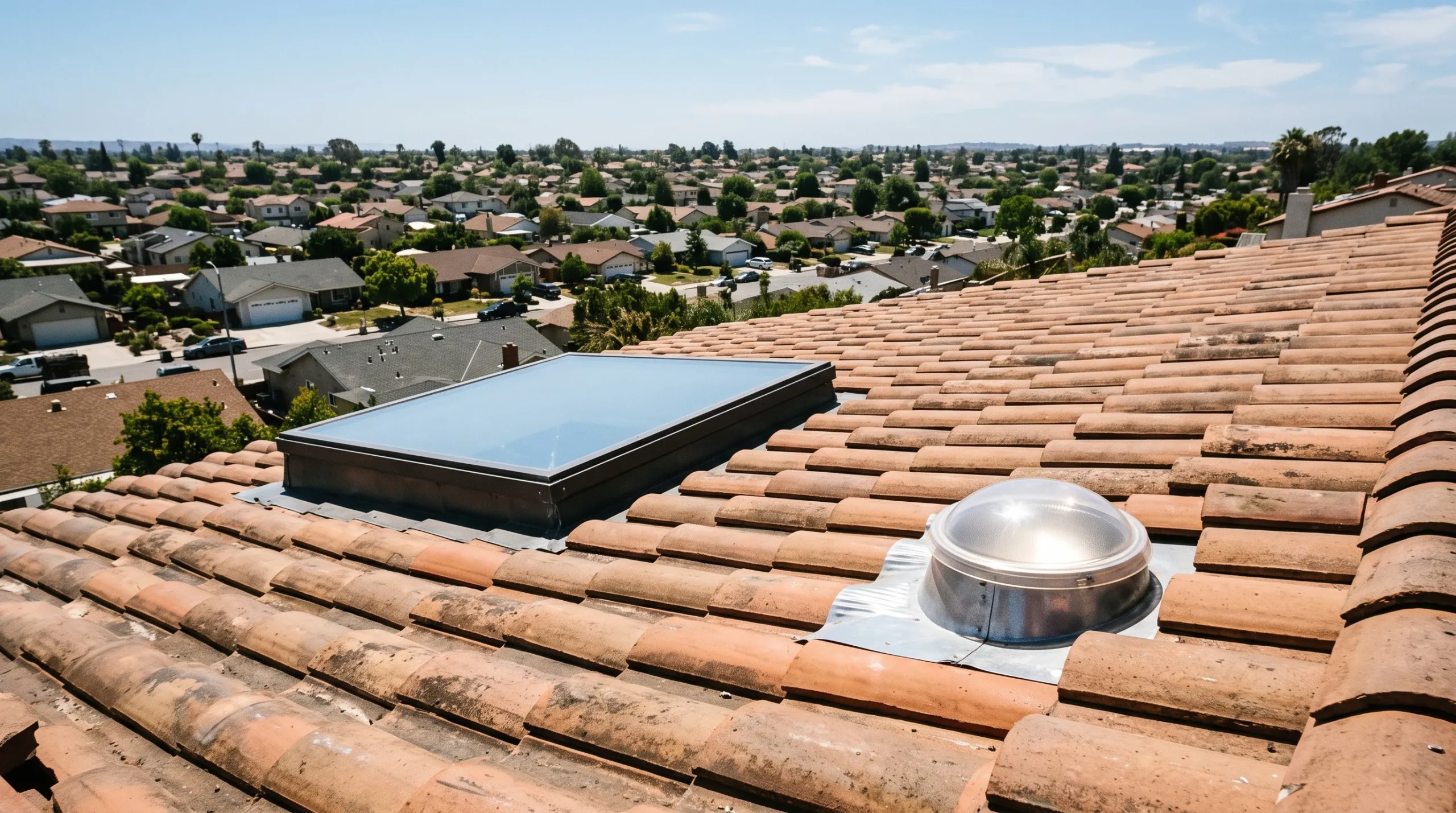
Tile roof skylight installation is more than cutting a hole: it requires removing tile around the opening, inspecting the deck for rot, framing the rough opening, and weaving step flashing into each tile course to keep monsoon rains out. A tubular solar tube achieves the same daylight with a much smaller penetration and a simpler install, often finished in half a day.
- A tile roof skylight install involves tile removal, deck inspection, framing, and step flashing woven into tile courses for leak protection.
- Solar tubes need a much smaller roof cut, making them ideal for hallways, bathrooms, and closets where light, not a view, is the goal.
- If your tile roof is approaching 15, 20 years old, get a professional inspection before adding any new penetration.
- A single-story tile roof skylight typically takes one day; a solar tube install can be done in half a day.
- Monsoon storms reveal flashing weaknesses quickly: most leaks occur at the step flashing, not the glass itself.
What Actually Happens When You Cut a Skylight Into a Tile Roof?
Cutting a skylight into a tile roof is a structured process that begins with removing several tile courses around the planned opening, inspecting the underlayment and deck for rot, then framing the rough opening to carry the roof load. The flashing is then woven tile by tile, and the opening is sealed from the inside out.
The work starts without a saw touching the roof. Roofers carefully lift and remove tiles in the work area, starting well above the cut line, so the mortar and underlayment stay intact. Once the deck is exposed, the team checks for soft spots, dry rot, or cracked plywood, and that inspection determines whether the job stays on schedule. After the opening is framed to meet load requirements, the skylight curb or frame is set, and the most important part begins: flashing. Instead of a single piece of metal, step flashing is installed one piece per tile course, directing water sideways onto the tile below. Only after the flashing is complete do the tiles go back, and any cut tiles are shaped to fit clean around the curb.
When DC Roofing of Arizona cuts a new skylight into a Tucson roof, we follow this full sequence because the first heavy monsoon rain will find every shortcut.
Solar Tube vs. Skylight: Which One Makes Sense for Your Room?
The right choice depends on the room and what you want from the daylight. A solar tube is a straightforward light pipe that funnels sunlight through a small dome on the roof; a skylight is a framed window in the roof deck that brings in light and a view. Here is how they compare for a typical Tucson tile roof.
| Feature | Skylight (Tile Roof) | Solar Tube |
|---|---|---|
| Roof penetration | Requires a framed opening, often 2 ft × 3 ft or larger | 10, 14 inch diameter hole; minimal tile disturbance |
| Light output | Bright, broad daylight with a direct outdoor connection | Concentrated daylight spread by a reflective tube; still effective |
| View | Yes: sky, stars, and clouds visible | No view; light only |
| Best rooms | Kitchens, living rooms, vaulted great rooms where a view matters | Hallways, closets, bathrooms, and interior rooms needing daylight |
| Typical install time | One full day for a single-story tile roof | Half a day, often without heavy framing |
| Relative cost | Higher: more materials, labor, and potential deck repair | Lower: simpler materials and a smaller penetration |
These numbers come from real-world install data and manufacturer guidance. DC Roofing of Arizona provides a free estimate so you get an exact number for your roof before committing.
Why the Age of Your Tile Roof Matters Before You Cut
If your tile roof is 15 to 20 years old, schedule a professional inspection before cutting any new skylight opening because the underlayment may be near the end of its service life, and adding a penetration can accelerate failure. Tucson’s UV exposure and monsoon cycles age underlayment faster than many homeowners realize.
The tile itself can last 50 years, but the waterproofing layer underneath does not. Once that underlayment starts to dry out and crack, a new hole creates a direct path for water. A roof inspection before cutting a skylight gives you a written report with photos, so you know whether the deck is solid or a full roof replacement makes more sense than adding a skylight to a failing assembly. We have seen homeowners pay for a beautiful skylight only to fight leaks two monsoons later because the underlayment was already compromised.
How Step Flashing Keeps a Tile Roof Skylight Watertight
Step flashing is a series of L-shaped metal pieces interwoven with each tile course that redirect water sideways onto the tile below, preventing it from entering the skylight opening. Without it, water runs straight down the rough opening’s edge and into the ceiling.
Most skylight leaks do not happen at the glass, they happen at the flashing junction. A properly installed skylight on a tile roof has step flashing that starts under the tile above the unit and steps down one tile course at a time. Each piece laps the one below, and a head flashing at the top prevents water from running behind the tile. If your home already has a leaking skylight, the fix often involves replacing or repairing the tile roof flashing details rather than the skylight itself.
The One-Day Install: How Long Does a Skylight or Solar Tube Actually Take?
A single-story tile roof skylight installation typically takes one full day, while a solar tube can be completed in half a day if the roof structure is straightforward. Larger openings that require cutting multiple tiles or adding structural headers can add a few hours.
The timeline breaks down like this: tile removal and deck inspection take the first hour or two; framing and curb installation take another couple of hours; then flashing, tile resetting, and interior trim work fill the afternoon. For a solar tube, the roof penetration is a small round hole that fits between rafters, so there is rarely any framing work, and tile disturbance is minimal. DC Roofing of Arizona schedules around monsoon patterns so your new skylight or solar tube is fully watertight the same day.
What a Tucson Homeowner Needs to Know About Monsoon Season and Skylight Leaks
Monsoon rains test every roof penetration, and the most common leak path for a skylight is the step flashing or curb joint, not the glass itself. Water driven by 40‑mph wind finds any gap in the flashing lap or sealant bead.
Before monsoon season hits, we recommend checking the sealant at the skylight curb and making sure no tiles above the unit have shifted. A pre‑monsoon inspection catches cracked sealant or bent flashing while it is still a small fix. If water does appear during a storm, a monsoon leak emergency repair can tarp the area and stop interior damage the same day while a permanent flashing repair is scheduled.
Can You Put Skylights in a Tile Roof? Yes, But the Pitch Matters
Yes, you can install a skylight on a tile roof, but most manufacturers require a minimum 15‑degree roof pitch to ensure water sheds off the glass and tile properly. On lower slopes, a curb‑mounted skylight raises the glazing above the tile plane so gravity still works.
A roof pitch below 15 degrees, common on some Tucson flat‑to‑low‑slope transitions, can let water pool against the skylight frame. In those cases, a site‑built curb lifts the skylight enough to meet manufacturer requirements. Always verify roof pitch requirements for skylights before ordering a unit, because a skylight rated for a steeper pitch installed on a shallow roof will void the warranty and invite leaks.
Should There Be Gaps Under Roof Tiles? And What That Means for a New Skylight
Small gaps under roof tiles are normal: they allow ventilation and drainage, and around a skylight the flashing must seal the roof penetration without blocking the tile field’s ability to breathe. Sealing those gaps can trap moisture and accelerate underlayment rot.
Tile roofs rely on an air gap between the tile and the underlayment to dry out after rain and to release heat. When a skylight is installed, the step flashing is designed to work with that airflow, not against it. Closing the gaps with caulk or foam around the skylight is a common mistake that leads to condensation and decay we find years later on failed installations.
New Skylight Cost in Tucson: What to Budget for a Tile Roof Install
Actual costs depend on roof condition, skylight size, and whether you choose a fixed or venting unit. Here are typical ranges for Tucson homeowners based on single‑story tile roof installations.
| Cost Component | Skylight (Tile Roof) | Solar Tube |
|---|---|---|
| Materials (unit, flashing, curb) | $600, $1,200 | $200, $500 |
| Labor (tile removal, framing, flashing, re‑set) | $900, $1,800 | $300, $600 |
| Potential deck or underlayment repair | $200, $800 (if needed) | Rarely needed |
| Permit fees | $100, $300 | $100, $200 |
| Total estimated range | $1,800, $4,100 | $700, $1,500 |
These ranges reflect national install data adjusted for tile roof complexity. DC Roofing of Arizona provides a free estimate so you know your exact cost before work begins.
When a Skylight Makes More Sense Than a Solar Tube (and Vice Versa)
Choose a skylight when you want a view of the sky, have a vaulted or cathedral ceiling, or need dramatic daylight in a kitchen or living room; choose a solar tube for tight spaces like a hallway, closet, or bathroom where a small, simple penetration supplies plenty of light. The decision comes down to whether the room needs a window to the outside or just more daylight.
A solar tube is the right answer for a dark interior bathroom that gets no natural light. For a kitchen with 12‑foot ceilings and a view of the Catalina Mountains, a skylight transforms the space. We help Tucson homeowners make this call during the estimate by walking the room with you and showing what each option delivers.
Frequently Asked Questions
Do solar tubes work on tile roofs?
Yes, solar tubes work well on tile roofs. The roof penetration is a small, round hole typically 10 to 14 inches in diameter, which fits between rafters and requires only a single piece of flashing. The tile is lifted and flashed the same way as a vent pipe, so the install is far simpler than a full skylight.
How much does a solar tube installation cost in Tucson?
For a single‑story tile roof, a solar tube installation in Tucson typically ranges from $700 to $1,500, including materials, labor, and permit fees. The smaller deck cut and shorter labor time keep the cost well below a full skylight. DC Roofing of Arizona provides a free, detailed estimate so the number is exact.
Will a skylight make my house hotter in Tucson?
A modern double‑glazed skylight with a low‑E coating adds negligible heat gain when properly installed, and a curb‑mounted unit with a shade or venting option can actually release hot air. Older single‑pane skylights without a curb can act like a heat lens, but today’s units are designed with desert climates in mind and carry solar heat gain ratings you can review before installation.
Do I need a permit to install a skylight in Tucson?
Yes, a building permit is required for skylight installation because the work involves cutting the roof deck and modifying the structure. DC Roofing of Arizona pulls all necessary permits and coordinates inspections as part of the installation, so you never have to manage that process yourself.
Can I install a skylight myself on a tile roof?
Tile roof skylight installation is not a safe DIY project. It requires removing and resetting tile without breaking it, framing the opening to code, and weaving step flashing into the tile courses. A single mistake in flashing or tile replacement will cause a leak that can go unnoticed until the next monsoon. Arizona requires licensed contractors for roof work that involves a structural opening, and our team holds ROC #328733.